
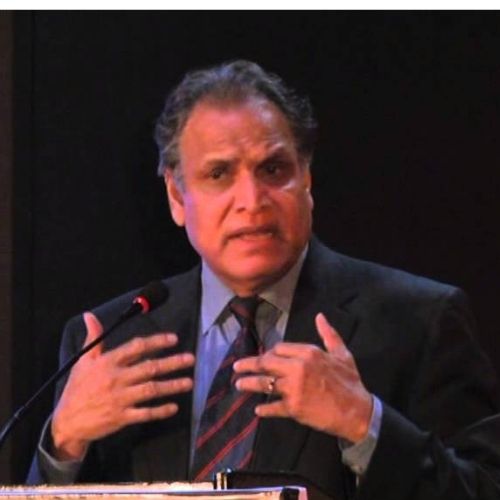
Padma Shri Dr. Sukhdev Thorat
Economist · Educationist · Former Chairman, University Grants Commission
Before Dr. Sukhadeo Thorat, caste was rarely treated as a serious variable in Indian economics. After him, it could no longer be ignored.
Born on 12 July 1949, Dr. Thorat studied at Milind College of Arts, Aurangabad, before earning his M.Phil and Ph.D. in Economics from Jawaharlal Nehru University, where he would go on to spend nearly three decades as teacher and researcher — eventually becoming Professor Emeritus at JNU's Centre for the Study of Regional Development. From 2006 to 2011, he chaired the University Grants Commission, India's central authority for higher education standards; he has also chaired the Indian Council of Social Science Research.
His scholarship's central argument is a demanding one: that economic growth and educational expansion, on their own, do not dissolve discrimination. Structural barriers — unequal access to land, markets, employment, institutions, and social dignity — persist independently of income, and public policy has to name and address them directly, not assume they'll fade with prosperity. Across four decades of research on rural poverty, agricultural development, and the situation of Dalits, Adivasis, denotified tribes and minorities, Thorat has built the intellectual case for treating social exclusion as an economic problem in its own right.
The Government of India conferred on him the Padma Shri in 2008. He is also a recipient of the Dr. Ambedkar National Award.
At Urgyen, Dr. Thorat brings the rigour of the academy to a festival built on the conviction that art and justice are not separate conversations — and that neither one is complete without the other.
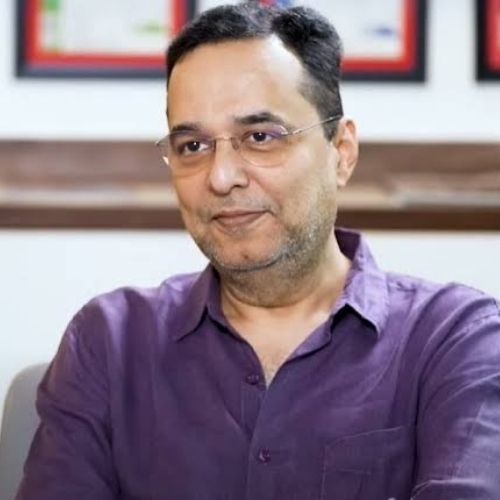
Raju Parulekar
Senior Journalist, Writer & Social Reformer
For more than twenty-five years, Raju Parulekar has treated journalism as an act of accountability, not stenography.
Born in Vengurla, in Maharashtra's Konkan region, Parulekar has written for Saamana, Maharashtra Times, Loksatta, Mahanagar and Lokprabha, building a body of political and social commentary that refuses to take institutional narratives at face value. Since 2002, he has also worked in television, notably with Sanvad on ETV Marathi — a programme built around telling the stories of people whose contributions had gone unrecognised. His research career includes work with Oxfam on the migration of sugarcane cutters into western Maharashtra, grounding his journalism in fieldwork, not just commentary from a desk.
He is also a published poet and author — his books include Ideas Are Dangerous, Manase: Bhetaleli Na Bhetaleli, and Hoy Ha Maharashtra Dharma Aahe — and has written stories, screenplays and dialogue for film and television. His honours include the Ulugulan Puraskar, the Bhai Vaidya Yuva Puraskar, the Voice of Democracy Award, and the O.P. Shah Chhaya Foundation Award, presented to him by Javed Akhtar.
Parulekar's presence at Urgyen is a reminder that the festival's commitments — to democracy, to caste and social justice, to interrogating power — aren't confined to canvas and stage. They belong equally to the front page.
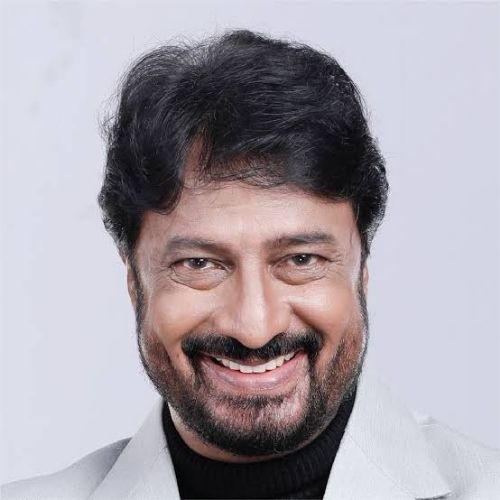
Kiran Mane
Actor and Social Reformer
Kiran Mane is an Indian Marathi actor, writer and socially engaged public figure, known for television roles in Majhya Navryachi Bayko and Mulgi Zali Ho, his appearance on Bigg Boss Marathi 4, and his acclaimed stage show The Kiran Mane Show – Story Shivarajyabhishekaachi, which brought the evidence-based history of Shivaji Maharaj to Marathi theatre for the first time in its 180-year history. Alongside acting, he speaks publicly on caste, equality, freedom of expression and democratic values, drawing on the social-reform legacies of Phule, Shahu Maharaj and Ambedkar.
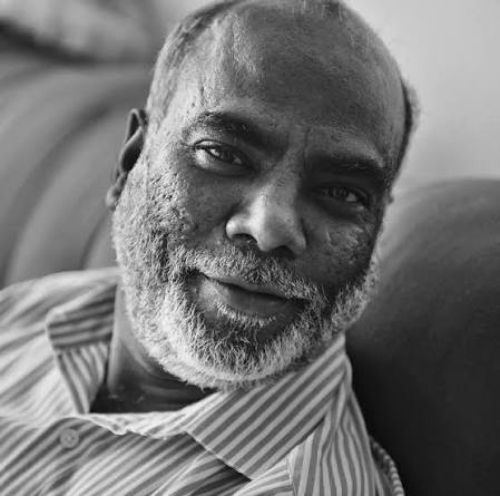
Padma Shri Sudharak Olwe
Documentary Photographer
For nearly four decades, Sudharak Olwe has pointed his camera at the people India prefers not to look at — and made looking away impossible.
Working out of Mumbai since 1988, Olwe built his career as a photojournalist before turning his lens toward the country's most systematically unseen labour: the city's conservancy workers, the women of Kamathipura, malnourished children in rural India, farmers in crisis, survivors of gender-based violence. His photographs don't observe from a safe distance. They sit inside the lives they document, refusing the easy grammar of pity in favour of something harder — dignity.
That long engagement with Mumbai's sanitation workers became In Search of Dignity and Justice (2015), with a foreword by Ratan N. Tata; an earlier body of work became Spirited Souls: Winning Women of Mumbai (2004). His photographs have travelled to the World Press Photo Exhibition in Amsterdam, the National Geographic All Roads Photographers Show in Washington D.C. and Los Angeles, the Angkor Photography Festival in Cambodia, and festivals across Germany, Japan and Sweden. In 2016, the Government of India conferred on him the Padma Shri.
In 2005, Olwe founded the Photography Promotion Trust, putting cameras into the hands of the very communities he photographs — the children of conservancy workers, women, rural youth — so that the act of witnessing is no longer his alone to perform.
At Urgyen, Olwe joins the Kalakar Parisanvad — Artists' Symposium — a rare chance to hear, in his own words, what four decades behind the camera have taught him about looking, justice, and who gets to be seen.
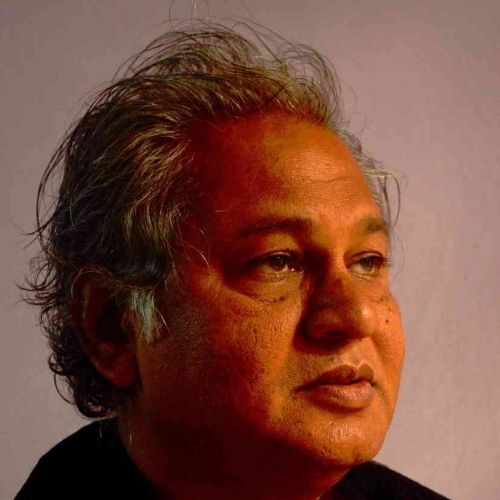
Savi Savarkar
Pioneer of Dalit Surrealism - Painter & Printmaker
For forty years, Savindra Sawarkar has painted what the Indian art world refused to hang.
Savindra Sawarkar — known widely as Savi — is a painter and printmaker from Nagpur, one of the most significant and most underrecognised artists working in India today. For over four decades, his canvases have done what the mainstream art establishment has largely refused to do: they have named things. Named the devadasi system for what it is. Named Manu. Named the instruments of untouchability — the broom, the earthen pitcher, the tinkling stick — and placed them in compositions of devastating surrealist force.
He is not an artist who depicts suffering from the outside. He is a Dalit artist painting the Dalit condition from within it, with the full weight of that lived experience behind every mark on the canvas. That is what makes his work different — not in subject matter alone, but in moral authority.
Click here for Complete Profile and Recent Works of Savi Sawarkar
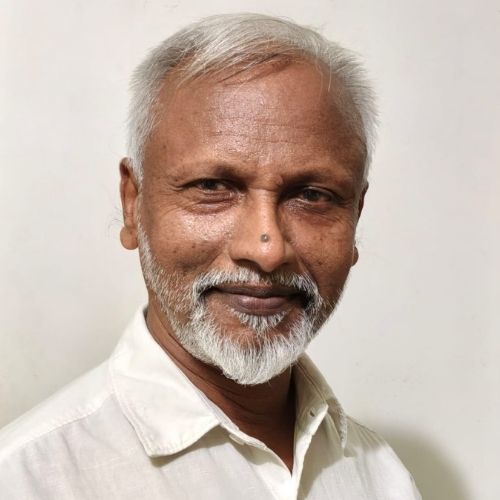
Mogglan Shravasti
Painter · Educator
Mogglan Shravasti has spent a career doing what serious figurative painting is supposed to do and rarely does anymore: sit with a story until it becomes an image worth returning to.
Born in 1962, trained at Sir J.J. School of Art, Mumbai, and later at Dr. Babasaheb Ambedkar Marathwada University, Shravasti built his practice at the intersection of academic discipline and narrative feeling. His canvases return again and again to the figure — to family, sacrifice, separation, relationship — rendered with a technical control that never overwhelms the human moment at the centre of the frame. A recurring and defining thread in his work is the life of Gautama Buddha, most visibly in his 2023 solo exhibition at Jehangir Art Gallery, where episode after episode of Buddha's story was translated into contemporary oil painting.
Between 1985 and 2002 alone, his work earned 22 awards. He has shown at Jehangir Art Gallery and Taj Art Gallery, and his work sits in the internationally recognised Imago Mundi Collection. As a longtime professor at Sir J.J. School of Art, he has also shaped the next generation directly — mentoring artists including his nephew, painter Siddharth Shingade.
Shravasti's presence at Urgyen brings something the festival values as much as protest: patience. A painter who has spent decades proving that compassion — Karuna — can be as radical a subject as rage, when it's rendered with total seriousness.
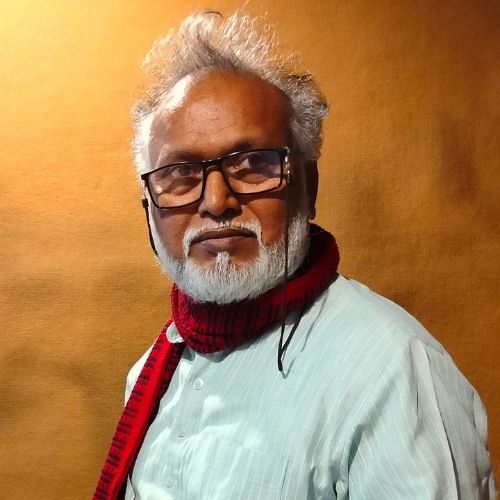
Sanjay Jiwane
Playwright and Filmmaker
Sanjay Jiwane doesn't think cinema owes anyone entertainment first. He thinks it owes society a conscience.
Born in January 1973, Jiwane came to filmmaking through theatre, carrying its collaborative instincts — actor, writer, lyricist all at once — into his work behind the camera. His debut feature as producer and director, Paidageer (2022), a Marathi social drama, follows a mother's fight to secure her child's education inside an environment pulling toward crime — treating education not as an individual privilege but as a collective social responsibility. Jiwane wrote both the screenplay and the lyrics himself; the film was produced under Samma Ditthi Films, with music by Dr. Anil Kawade and songs released through Zee Music Company. He is also associated, across acting, writing and directing roles, with Tanhaa (2022) and Tejaswini (Marathi, 2023).
Jiwane has spoken of a larger ambition: to build a Buddhist film industry as a genuine cultural movement — cinema in service of human development and social reconstruction, not spectacle for its own sake.
At Urgyen, alongside Sudharak Olwe and Mogalan Sravasti, Jiwane speaks on the Kalakar Parisanvad panel — a filmmaker for whom the camera is not an escape from responsibility, but one more instrument for carrying it.
Padma Shri Geshe Ngawang Samten
Former Vice Chancellor, Central Institute of Higher Tibetan Studies, Sarnath, Varanasi
Geshe Ngawang Samten spent more than two decades making sure that one of the world's great philosophical traditions did not become a museum piece.
Educated first at the Central School for Tibetans in Chandragiri, Odisha, he went on to earn the Shastri, Acharya and Ph.D. degrees at the Central Institute of Higher Tibetan Studies, and holds the Geshe Lharampa degree from Ganden Shartse Monastic University — the highest scholastic degree in the Tibetan Buddhist monastic tradition. He joined CIHTS as a research assistant and rose to professor of Buddhist philosophy, later directing its Research and Publications Division before becoming Director of the Institute in 2001, and then Vice Chancellor of the renamed Central University of Tibetan Studies in 2008.
His scholarly contributions include editing the Tibetan critical edition of Nagarjuna's Ratnavali and co-translating Tsongkhapa's Ocean of Reasoning with Professor Jay Garfield — work that has helped move foundational Buddhist philosophical texts from monastery to modern university classroom without losing their depth in the translation. The Government of India conferred on him the Padma Shri in 2009, and he received the Vesak Samman in 2016 for his contribution to Indian philosophy, arts and culture.
At Urgyen, Geshe Ngawang Samten's presence connects the festival directly to the living philosophical tradition — Buddhist thought, rigorously preserved and rigorously taught — that runs beneath so much of the art and conviction on display across these three days.
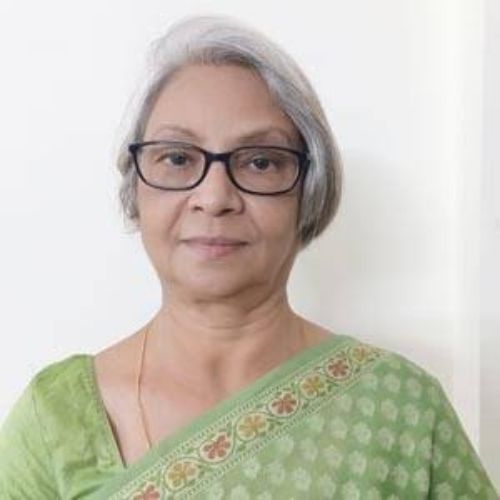
Dr Vimal S Thorat
Dalit Feminist Leader · Educator · Human Rights Advocate
Prof. Vimal Thorat has spent her career insisting on a fact Indian feminism was slow to accept: that caste and gender cannot be addressed as separate problems, because Dalit women don't experience them separately.
A former Professor of Hindi at Indira Gandhi National Open University, Prof. Thorat is the National Convener of the All India Dalit Mahila Adhikar Manch (AIDMAM) — a national platform, initiated by the National Campaign on Dalit Human Rights, dedicated specifically to the rights, dignity and safety of Dalit women. Under her leadership, AIDMAM has worked on caste-based violence, discrimination, political participation, access to justice, manual scavenging and labour rights. She has participated in national consultations and tribunals on atrocities and sexual violence, combining human-rights advocacy with community mobilisation.
As a scholar, she has worked to bring Dalit literature — particularly autobiographies, poetry and narratives by Dalit women — into academic and literary institutions that had long kept it at the margins, including through translation into Hindi. She was associated with the National Campaign on Dalit Human Rights when the organisation received the Rafto Prize in 2007 for its contribution to human rights and social justice.
At Urgyen, Prof. Thorat brings a perspective the festival treats as non-negotiable: that any serious reckoning with caste has to reckon with gender inside it, not alongside it.
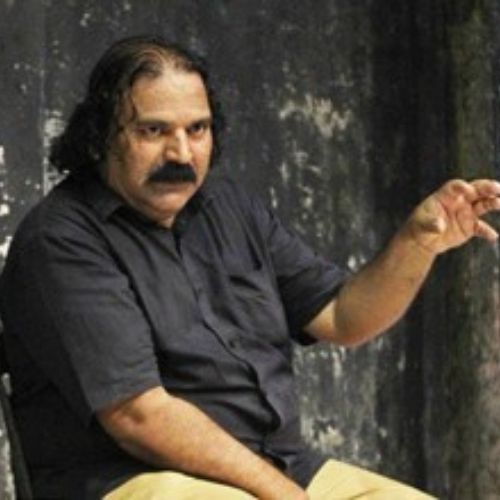
Loksahir Sambhaji Bhagat
Renowned Maharashtrian folk singer, poet, playwright, and revolutionary activist.
Lokshahir Sambhaji Bhagat is a prominent Maharashtrian folk singer, poet, playwright, composer, educator and revolutionary activist, born in 1959 in Satara district. Carrying forward the legacy of Annabhau Sathe, Amar Shaikh and Vamandada Kardak, and a committed Ambedkarite, he revived the Ambedkari Jalsa tradition from 1999, participated in the Namantar Andolan, and works through his Sanvidhaan Sanvardhan Samiti to take constitutional values to grassroots communities. He has written more than 125 activist street plays, including Adgal, its adaptation Bombay–17, and Shivaji Underground in Bhimnagar Mohalla, and is the author of three books — the autobiography Katlakhalcha Pani, the poetry collection Tod Hi Chakori, and the essay collection Ran Halgi. He also composed songs for the film Court, and through Manuskichi Shala continues to promote human values and equality beyond caste and class divisions.